The Alignment of Ancient Egyptian Pyramids with True North
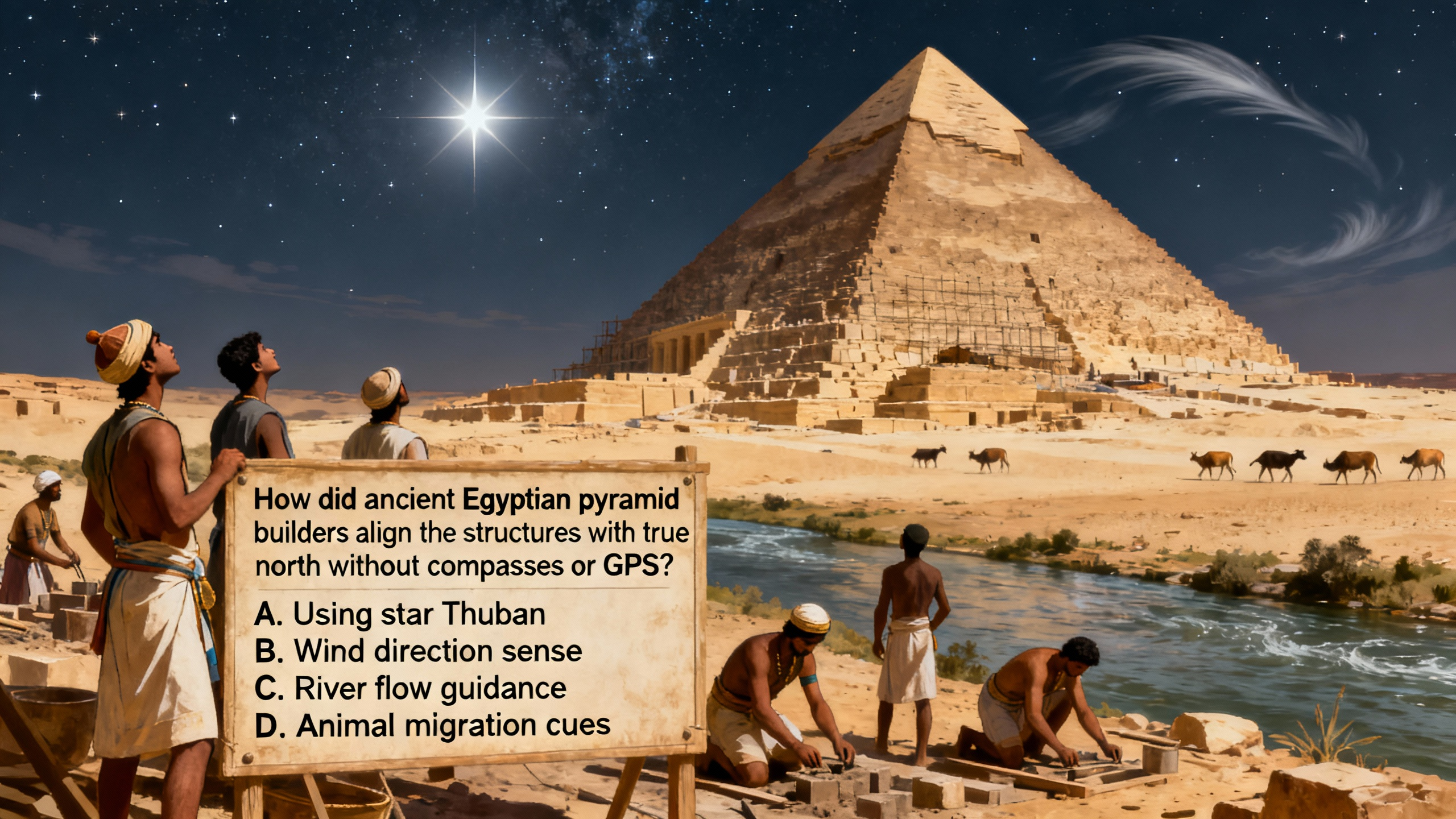
The alignment of ancient Egyptian pyramids with true north without the aid of compasses or GPS is a remarkable feat that has fascinated historians and archaeologists for centuries. These colossal structures, such as the Great Pyramid of Giza, stand as testaments to the advanced knowledge and engineering prowess of the ancient Egyptians. The precision with which they aligned their pyramids to true north is truly astonishing, with some pyramids deviating by less than a single degree. This high - precision alignment was not just a matter of aesthetics; it held significant religious, cultural, and astronomical importance for the ancient Egyptians. There are several theories about how the pyramid builders achieved this remarkable feat, each offering unique insights into their ingenuity and understanding of the natural world. 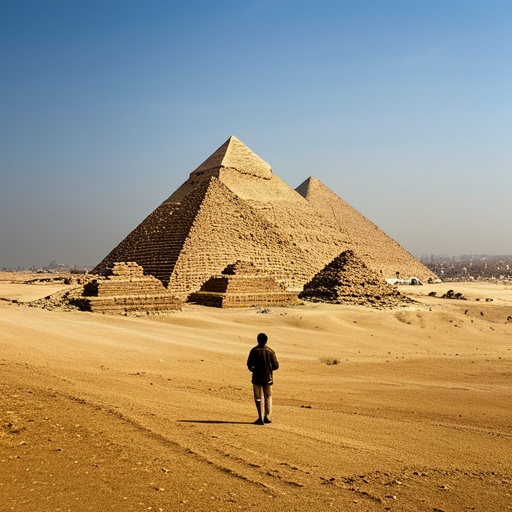
One prominent theory involves the use of the stars. The ancient Egyptians were highly skilled astronomers. They closely observed the night sky and were aware of the movement of celestial bodies. In ancient Egyptian society, the stars were not just distant lights in the sky; they were integral to their religious beliefs and understanding of the universe. The Egyptians believed that the gods resided in the heavens, and the stars were seen as manifestations of these divine beings. This religious significance likely motivated them to study the stars in great detail.
In particular, they could use the stars to determine the north - south axis. The star Thuban, which was the pole star during the time of pyramid construction (around 2700 - 2100 BC), would have been a key reference point. At that time, Thuban was much closer to the celestial north pole than Polaris, the current pole star. The builders could set up a basic sighting device, perhaps a simple pair of stakes or a more sophisticated sighting tunnel. By aligning these devices with Thuban as it crossed the meridian (the imaginary line running from north to south through the observer's zenith), they could establish a north - south line.
This method would have required patience and multiple observations over several nights to account for any errors due to the star's slight movement in the sky. The Earth's axial precession causes the position of the celestial pole to slowly change over time, so even though Thuban was the pole star during the pyramid - building era, it still had a small circular motion around the true celestial north pole. The ancient Egyptians would have had to carefully note the position of Thuban at different times and average these observations to get an accurate north - south alignment. Despite these challenges, it was a reliable way to find true north. For example, if they observed Thuban on three consecutive clear nights and found that it crossed the meridian at slightly different positions each time, they could calculate the average position and use that as the basis for their alignment.
Another possible method is related to the shadow - casting technique. The Egyptians could have used a vertical stick, known as a gnomon. This simple yet effective tool has been used by various ancient cultures around the world to measure time and determine directions. The concept behind it is based on the fact that as the sun moves across the sky, the position of the shadow cast by the gnomon changes.
Throughout the day, as the sun moved across the sky, the gnomon would cast a shadow. By marking the tip of the shadow at regular intervals, they could trace an arc on the ground. The shortest shadow of the day indicates the north - south line because it occurs when the sun is at its highest point in the sky, which is due south (in the northern hemisphere). This is because the sun reaches its zenith (the highest point in the sky) when it is directly south of the observer in the northern hemisphere.
To increase the accuracy of this method, they might have repeated the process over several days and averaged the results. Weather conditions could affect the accuracy of a single - day measurement. For instance, if there were clouds or haze on a particular day, the shadow might not be clearly defined. By repeating the experiment over multiple days, they could reduce the impact of such external factors. They could also account for any small variations in the Earth's rotation and the sun's apparent path across the sky. This way, even without modern technology, they were able to achieve a high level of precision in aligning their pyramids with true north, a testament to their advanced knowledge and ingenuity.
There is also evidence to suggest that the ancient Egyptians might have combined these methods. Using both star - based and shadow - based techniques could have provided a more accurate and reliable alignment. For example, they could first use the star sighting method to get a rough estimate of the north - south axis. Then, they could use the shadow - casting technique to fine - tune the alignment. This combination approach would have minimized the errors associated with each individual method.
The alignment of the pyramids with true north also had practical implications. In ancient Egyptian architecture, the orientation of buildings was crucial for various reasons. The north - south alignment might have been related to the flow of the Nile River, which was the lifeblood of ancient Egypt. The Nile flows from south to north, and the alignment of the pyramids could have been a way to symbolically connect these monumental structures with the river. Additionally, the orientation could have had an impact on the internal ventilation and lighting of the pyramids. The precise alignment might have allowed for optimal airflow and sunlight penetration, which was important for the preservation of the pharaoh's body and the various artifacts placed inside the pyramids.
Furthermore, the alignment of the pyramids with true north was likely part of a larger cultural and religious complex. The ancient Egyptians believed in an afterlife, and the pyramids were built as tombs for the pharaohs, who were considered divine rulers. The alignment with the north might have been related to their beliefs about the journey of the pharaoh's soul to the afterlife. The north was associated with the realm of the gods in Egyptian mythology, and aligning the pyramids with true north could have been a way to ensure that the pharaoh's soul had a direct path to the divine realm.
Modern archaeologists and historians continue to study the alignment of the ancient Egyptian pyramids. They use advanced technologies such as satellite imagery and laser scanning to analyze the pyramids in greater detail. These modern tools have allowed researchers to confirm the high level of precision in the pyramid alignments and have also provided new insights into the possible methods used by the ancient Egyptians. For example, satellite imagery can show the overall layout of the pyramid complex and how it relates to the surrounding landscape, while laser scanning can reveal the exact angles and dimensions of the pyramid's sides, helping to determine the accuracy of the alignment.
In conclusion, the alignment of ancient Egyptian pyramids with true north is a remarkable achievement that showcases the ancient Egyptians' deep understanding of astronomy, mathematics, and engineering. Whether they used the stars, shadow - casting techniques, or a combination of both, their ability to achieve such high - precision alignment without modern technology is truly awe - inspiring. These pyramids not only stand as architectural marvels but also as a window into the rich cultural and intellectual heritage of ancient Egypt.