The Chameleon: A Master of the Long Tongue
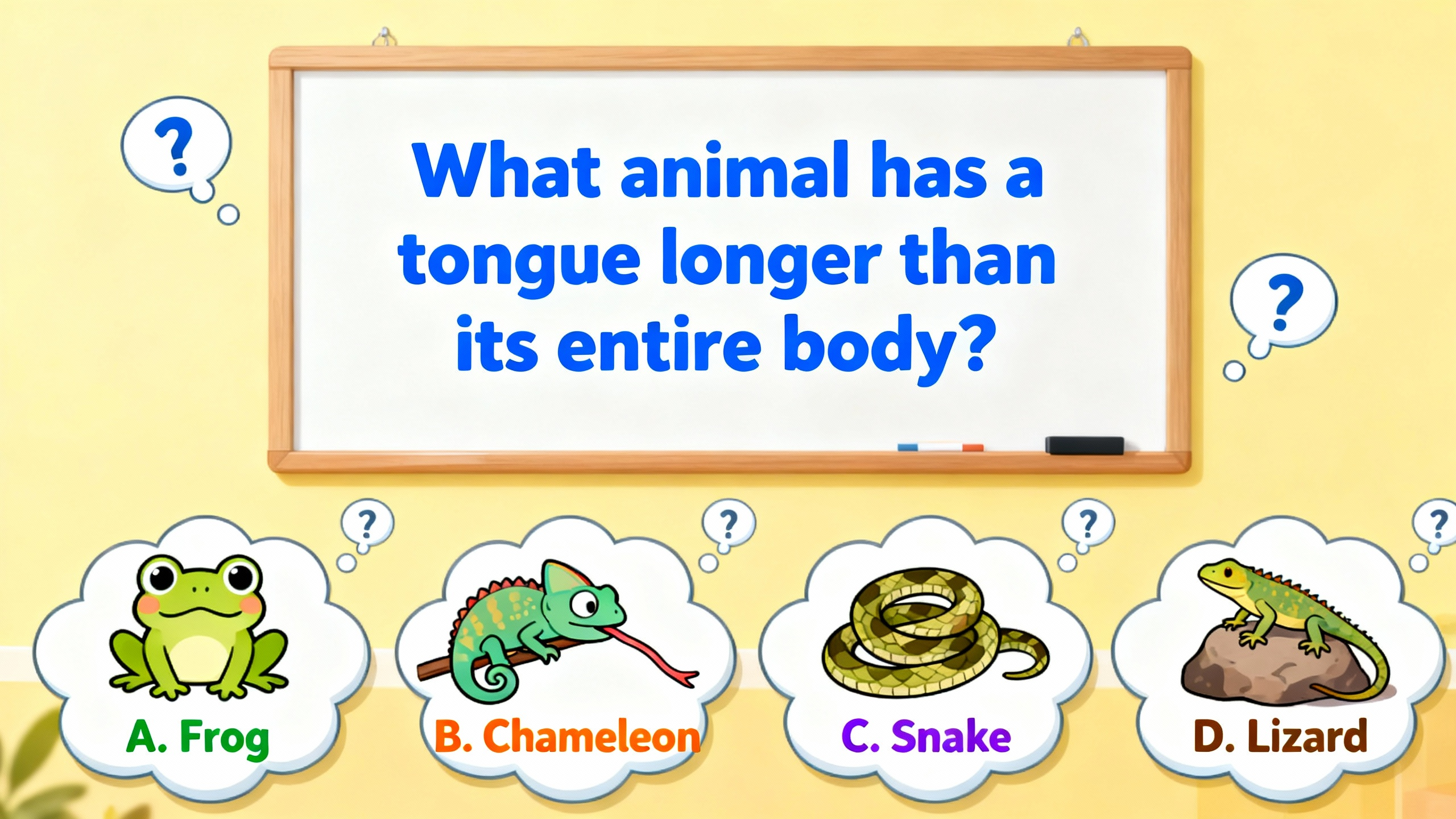
The animal kingdom is filled with a plethora of fascinating creatures, each boasting unique adaptations that help them survive in their respective environments. Among these remarkable animals, the chameleon stands out as a true marvel, especially when it comes to its extraordinary tongue. The chameleon is the animal that has a tongue longer than its entire body, a feature that sets it apart from most other species on the planet. Chameleons are well - known for their unique physical features, and their incredibly long tongues are one of the most remarkable.
Chameleons belong to the family Chamaeleonidae, which consists of over 200 different species. These reptiles can be found in various parts of the world, including Africa, Madagascar, southern Europe, and Asia. Their habitats range from the lush, dense rainforests where sunlight filters through the thick canopy to the arid savannas where water is scarce and the heat can be intense. Despite these diverse environments, one characteristic remains constant across most chameleon species: their long tongues.
Chameleons use their long tongues as a highly effective hunting tool. Their tongues can be up to 1.5 to 2 times the length of their body. To put this into perspective, imagine a human being able to extend their tongue to a length that is one and a half to two times their own height. It's truly a remarkable feat of nature. When they spot prey, such as insects, they can project their tongues out at an astonishing speed. For example, some chameleon species can shoot their tongues out at speeds of up to 26 body - lengths per second. This is equivalent to a 6 - foot - tall person being able to launch their tongue at a speed of 90 miles per hour!
The tip of the chameleon's tongue is a specialized muscular structure that forms a suction - cup - like shape. This allows it to quickly and firmly grasp the prey. When the tongue makes contact with an insect, the suction cup creates a strong seal, preventing the prey from escaping. It's like a high - tech vacuum cleaner designed specifically for catching bugs. The rapid projection of the tongue is due to a complex system of muscles and bones in the chameleon's head and neck. The hyoid bone, in particular, plays a crucial role in the extension of the tongue. The hyoid bone is a U - shaped bone located in the throat area. In chameleons, this bone is highly modified and can be rapidly extended, propelling the tongue forward with great force.
To understand the mechanics of the chameleon's tongue projection better, let's take a closer look at the muscles involved. There are two main sets of muscles: the accelerator muscles and the retractor muscles. The accelerator muscles are responsible for the initial rapid projection of the tongue. These muscles contract quickly, building up a large amount of force that is transferred to the hyoid bone and the tongue. Once the tongue has reached its target, the retractor muscles kick in. These muscles are powerful and can quickly pull the tongue back into the chameleon's mouth, bringing the captured prey with it.
Another interesting aspect is that chameleons can accurately aim their tongues at their targets. Their independently moving eyes give them a wide field of vision, and they can precisely calculate the distance and direction to the prey. Each eye can move in a different direction, allowing the chameleon to scan its surroundings without having to move its head. This gives them a 360 - degree view of their environment, which is extremely useful for spotting potential prey. Once the chameleon has located an insect, it uses its eyes to focus on the target and calculate the exact distance. It then adjusts the angle and force of its tongue projection accordingly.
Let's consider a real - life scenario. A chameleon is perched on a branch in a rainforest. Its eyes are constantly moving, scanning the leaves and branches for any signs of movement. Suddenly, it spots a small fly sitting on a nearby leaf. The chameleon's eyes lock onto the fly, and it begins to calculate the distance. In a split second, it projects its tongue towards the fly. The suction - cup tip of the tongue makes contact with the fly, and the retractor muscles quickly pull the tongue back, bringing the fly into the chameleon's mouth. All of this happens in a fraction of a second, leaving the fly with no chance of escape.
This amazing adaptation gives chameleons a significant advantage in capturing food in their natural habitats. In the rainforest, where insects are abundant but well - hidden among the foliage, the chameleon's long tongue allows it to reach into small crevices and catch insects that other predators might miss. In the savanna, where prey is more spread out, the chameleon can use its long - range tongue to capture insects from a distance, reducing the need to move around and potentially expose itself to predators.
However, the chameleon's long tongue is not just useful for hunting. It also plays a role in communication and defense. In some cases, chameleons may use their tongues to show aggression or to ward off potential threats. They might stick their tongues out as a warning signal to other animals, indicating that they are ready to defend themselves. Additionally, the tongue can be used to taste the environment around them, helping them to detect the presence of other chameleons or potential mates.
In conclusion, the chameleon's long tongue is a remarkable adaptation that has allowed these reptiles to thrive in a variety of environments. From its incredible speed and accuracy to its unique suction - cup tip, every aspect of the chameleon's tongue is perfectly designed for hunting and survival. As we continue to study these fascinating creatures, we are sure to uncover even more secrets about their amazing tongues and the many ways they contribute to the chameleon's success in the wild.