The Mayfly: An Insect with an Incredibly Short Adult Lifespan
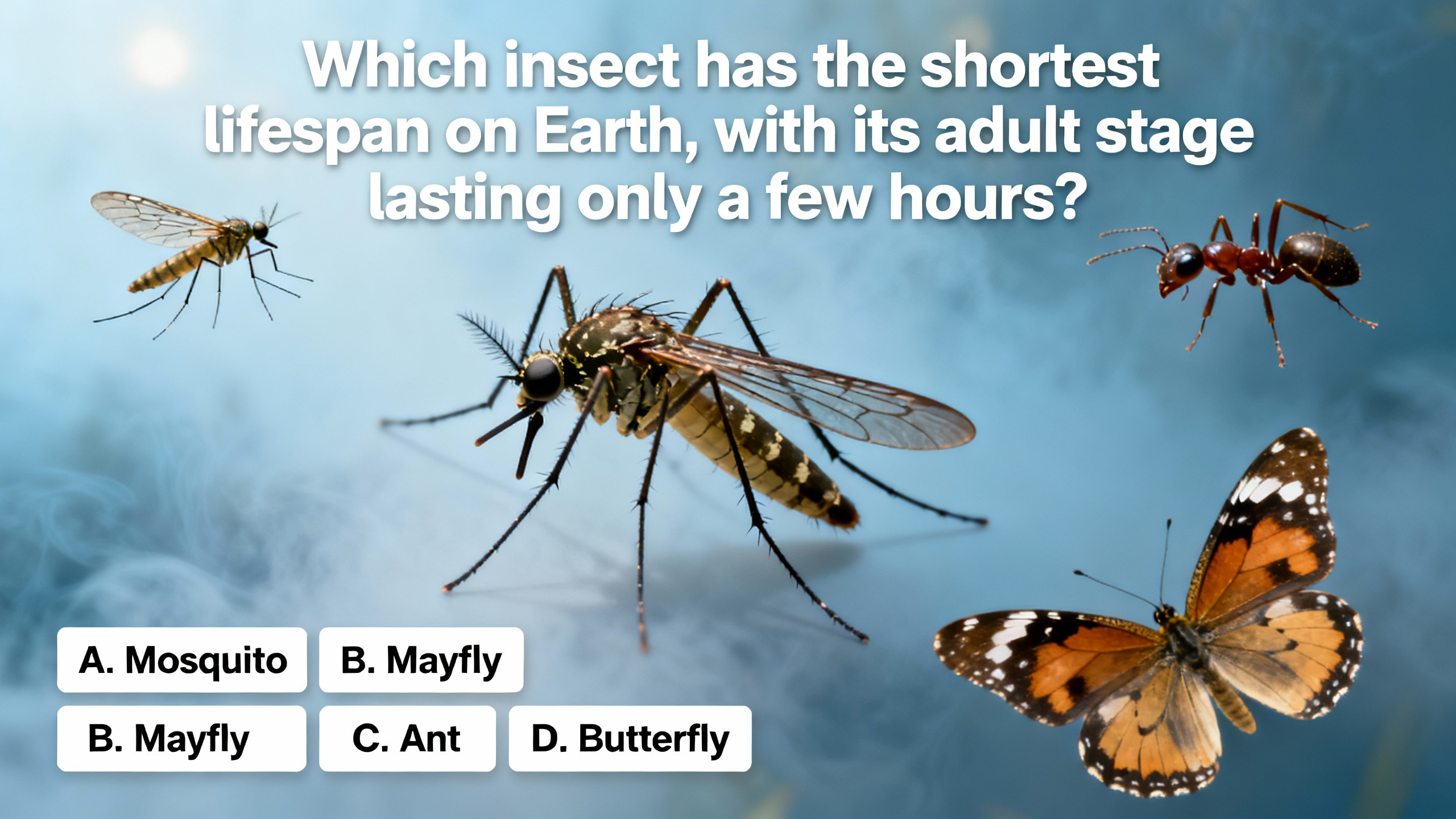
The insect with the shortest lifespan in its adult stage, which lasts only a few hours, is the mayfly. Mayflies belong to the order Ephemeroptera, a name that fittingly reflects their short - lived nature, as "ephemeros" in Greek means "short - lived". These delicate creatures have long fascinated entomologists and nature enthusiasts alike due to their unique life cycle and fleeting adult existence. The mayfly's name itself gives a hint about its appearance and the time of year when it is most commonly seen. Mayflies often emerge in large numbers during the spring and early summer months, particularly in May, which is how they got their name. 
There are over 3,000 known species of mayflies across the world, each with its own specific characteristics and habitat preferences. They can be found on every continent except Antarctica. Mayflies are an important part of many freshwater ecosystems, serving as a crucial link in the food chain. For instance, in a river ecosystem, mayfly nymphs are a favorite food source for many fish species. Trout, in particular, rely heavily on mayflies as a significant part of their diet. This makes mayflies not only interesting from a biological perspective but also important for the overall health and balance of aquatic environments.
In the life cycle of a mayfly, it spends a relatively long time in the nymph stage, which can last from several months to a few years, depending on the species. During this period, the mayfly nymphs live in freshwater environments such as rivers and lakes. They are well - adapted to their aquatic habitats. Their bodies are streamlined, allowing them to move easily through the water. Some mayfly nymphs have gills on the sides of their bodies, which they use to extract oxygen from the water, much like fish. These gills are often feathery in appearance, increasing the surface area for gas exchange.
Mayfly nymphs are herbivores, and they feed on algae and other small organic matter. Algae are abundant in freshwater ecosystems, and mayfly nymphs play an important role in controlling their growth. By consuming algae, they help to prevent over - growth, which can lead to problems such as reduced oxygen levels in the water. As they grow, mayfly nymphs go through a series of molts. Molting is a process where the nymph sheds its old exoskeleton to make way for a larger one. Each molt represents a stage of growth, and mayfly nymphs can go through anywhere from 10 to 50 molts during their nymph stage, depending on the species. This process is not only essential for their physical growth but also for their development into adult mayflies.
However, once they enter the adult stage, their lives are extremely brief. The transformation from nymph to adult is a remarkable event. First, the nymph rises to the water's surface and emerges from the water as a sub - imago, which is an intermediate stage between the nymph and the fully - developed adult. The sub - imago has a duller color and a less - developed body compared to the adult. It is also not yet capable of mating. After a short period, usually a few hours to a day, the sub - imago molts again to become a fully - fledged adult mayfly.
Adult mayflies have one primary purpose: reproduction. They do not have functional mouthparts and cannot eat. Their bodies are designed mainly for flying and mating. Their wings are one of their most distinctive features. Mayfly wings are large and often transparent, with a delicate network of veins. These wings allow them to fly with relative ease, although their flight is usually short and erratic. They use their wings to search for mates in the air. The males are often more active flyers, performing elaborate courtship displays to attract females. These displays can involve flying in patterns or hovering in mid - air.
After emerging from the water as adults, they quickly find a mate. The mating process is a race against time. Once the male and female mayflies find each other, they mate in mid - air. The male transfers sperm to the female, who then stores it until she is ready to lay her eggs. The mating process is often over within a matter of minutes. Once the mating process is completed, the females lay their eggs in the water. The female mayfly dips her abdomen into the water and releases her eggs, which sink to the bottom of the river or lake. Some species of mayflies lay their eggs in a gelatinous mass, which helps to protect the eggs from being washed away by the current.
Then both male and female mayflies die soon after. Most mayflies' adult lives are measured in hours, with some species living as little as 30 minutes to a few hours. This incredibly short adult lifespan is an evolutionary adaptation that has allowed mayflies to survive and thrive in their ecosystems over millions of years, despite the brevity of their adult existence. By having a short adult lifespan, mayflies can quickly reproduce and ensure the survival of their species. Their large numbers during the mating season also increase the chances of successful reproduction. Even though each individual mayfly has a short life, the collective impact of a large mayfly emergence can be significant for the ecosystem. For example, the sudden influx of mayflies can provide a large food source for birds and other predators, which can have a cascading effect on the entire food web.
Mayflies also serve as important bioindicators of water quality. Since they are highly sensitive to changes in their environment, the presence or absence of mayflies in a freshwater ecosystem can tell us a lot about the health of the water. If mayfly populations are declining, it could be a sign of pollution or other environmental problems in the water. Scientists often study mayfly populations to monitor the health of rivers and lakes and to develop conservation strategies to protect these important ecosystems.
In conclusion, the mayfly is a truly remarkable insect. Its long nymph stage in the water and its incredibly short adult lifespan are both fascinating aspects of its biology. Despite their brief adult lives, mayflies play a vital role in freshwater ecosystems, from controlling algae growth to serving as a food source for other organisms and indicating water quality. Their unique life cycle is a testament to the wonders of evolution and the complex relationships that exist in nature.