The Immortal Jellyfish: Turritopsis dohrnii
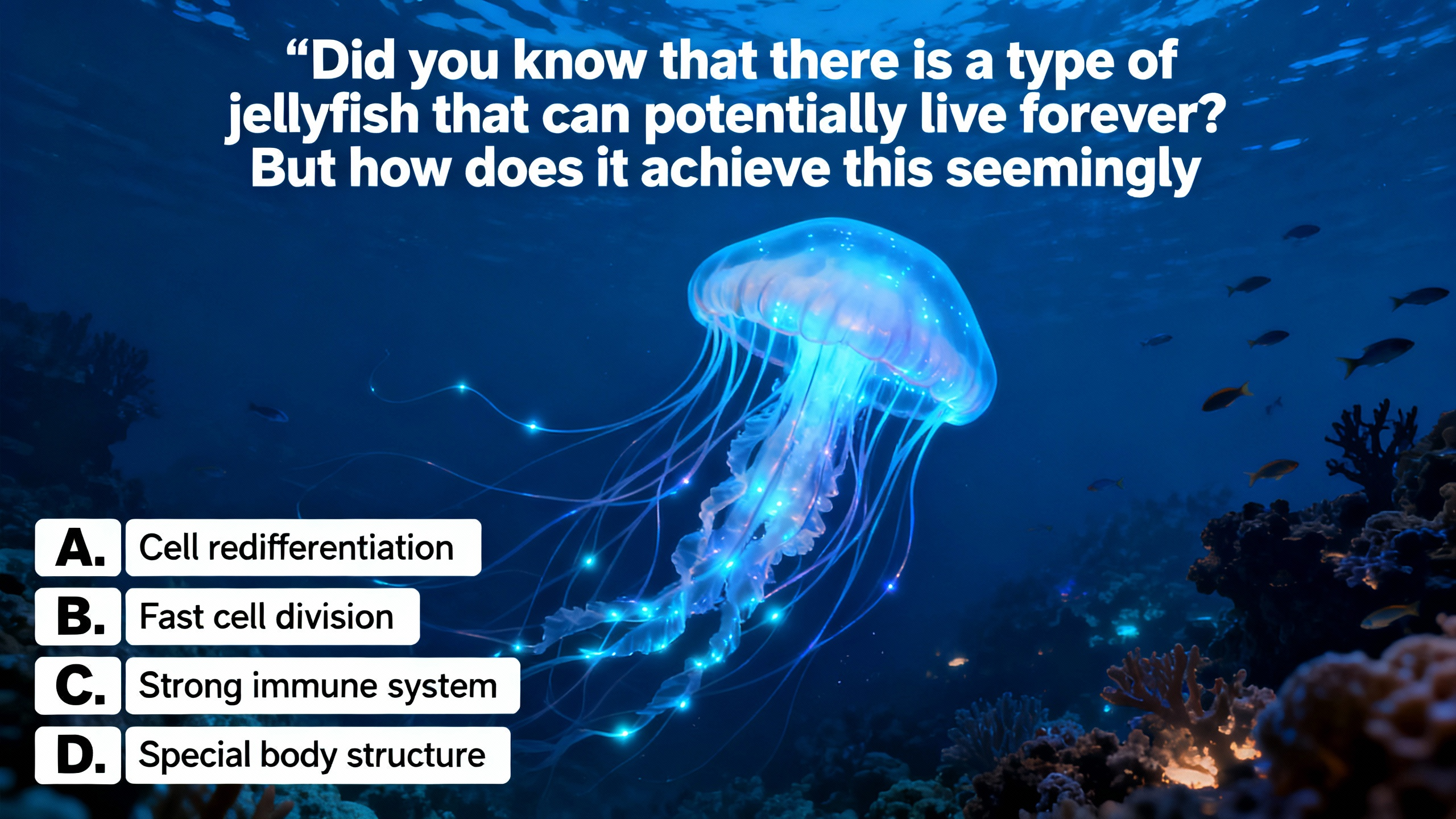
 Yes, there is a type of jellyfish called Turritopsis dohrnii, often referred to as the "immortal jellyfish," that can potentially live forever. This remarkable creature has the ability to revert its cells back to their earliest form and start its life cycle anew, a process known as transdifferentiation. To truly understand the significance of this ability, we need to take a step back and look at the general life cycle of most organisms. In the vast majority of the animal kingdom, once an organism reaches a certain stage of development, its cells differentiate into specific types with set functions. For example, in humans, our nerve cells are designed to transmit electrical signals, and muscle cells are built for contraction. These cells cannot easily transform into other cell types. But the immortal jellyfish defies this norm.
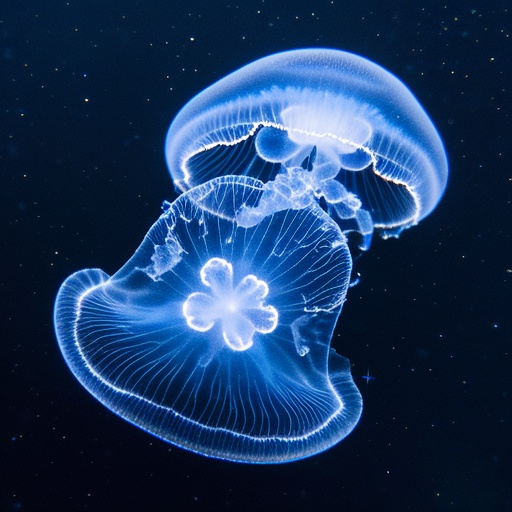
Turritopsis dohrnii was first discovered in the Mediterranean Sea in the late 19th century. Since then, it has been found in various parts of the world, from the warm waters of the Caribbean to the colder seas around Japan. Its wide distribution is a testament to its adaptability, which is further enhanced by its unique ability to reset its life cycle. The jellyfish has a relatively simple body structure, consisting mainly of a bell - shaped top and long, trailing tentacles. These tentacles are armed with stinging cells called cnidocytes, which it uses to capture small prey such as plankton and tiny fish larvae. Despite its small size, usually only about 4.5 millimeters in diameter, it has a big secret hidden within its cells.
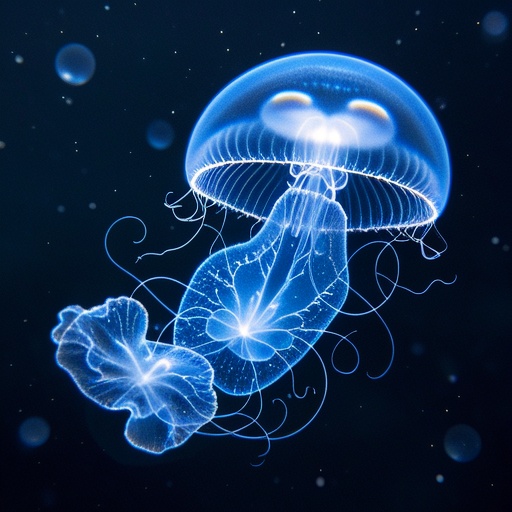 When faced with environmental stress, physical damage, or old age, Turritopsis dohrnii can transform its mature cells into a younger state. For instance, its medusa form, which is the adult, bell - shaped stage of a jellyfish, can transform its cells into polyps, the earliest stage of a jellyfish's life cycle. During this process, the jellyfish essentially "rewinds" its biological clock. The cells change their function and identity; muscle cells can become nerve cells, and vice versa. This is a highly unusual ability in the animal kingdom, as most organisms have a fixed cell fate once cells have differentiated. Let's imagine a human in a similar situation. If a person were to get severely injured, their body would try to heal the wound by using existing cells to repair the damaged tissue. But it couldn't simply transform skin cells into liver cells, for example. The immortal jellyfish, on the other hand, can completely restructure its cellular makeup.
The process of transdifferentiation in Turritopsis dohrnii is a complex and fascinating one. It starts when the jellyfish senses a threat or stressor in its environment. This could be a sudden drop in water temperature, a change in salinity, or an encounter with a predator. Once the stress is detected, the jellyfish begins to break down its existing tissues. The cells start to lose their specialized functions and revert to a more primitive state. This is similar to how a caterpillar breaks down its body tissues during metamorphosis to become a butterfly, but on a much more extreme level. As the cells de - differentiate, they form a mass of undifferentiated cells, which then start to redifferentiate into the cells needed for the polyp stage. The polyp is a small, sessile organism that attaches itself to a hard surface, such as a rock or a shell. From the polyp, new medusae can bud off, starting the cycle all over again.
To better understand the implications of this ability, we can look at the potential impact on the ecosystem. Turritopsis dohrnii has the potential to outcompete other species in some situations. Since it can avoid death due to old age, it can continuously reproduce and increase its population. This could disrupt the balance of the food chain in areas where it is present. For example, if the jellyfish population grows too large, it could consume a significant amount of plankton, which is a vital food source for many other marine organisms. On the other hand, its ability to survive in harsh conditions also means that it could be an important part of the ecosystem in areas that are otherwise inhospitable to other species.
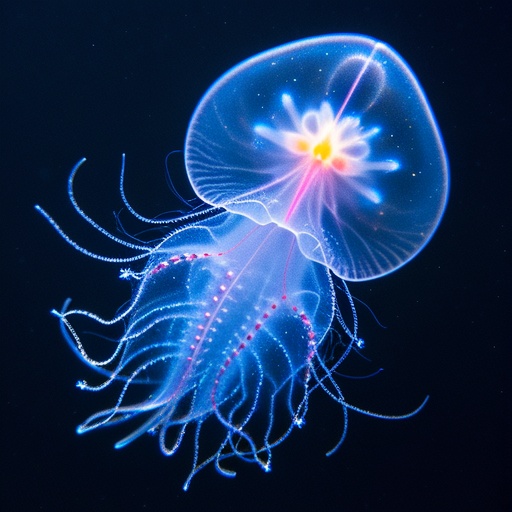 The key to this process lies in the jellyfish's genetic makeup and cellular flexibility. Its genes allow for the activation of a series of complex biochemical pathways that enable the cells to de - differentiate and then redifferentiate into different cell types. Scientists have been studying these genes to understand how they work. By comparing the genes of Turritopsis dohrnii with those of other jellyfish species that do not have the same ability, they hope to identify the specific genes responsible for transdifferentiation. This research could have far - reaching implications for human medicine. If we can understand how the jellyfish's genes control cell transformation, we might be able to develop new treatments for diseases such as cancer, where cells lose their normal regulatory mechanisms and start to grow uncontrollably.
This not only allows the jellyfish to recover from adverse conditions but also to escape death in a sense. By repeating this cycle of transformation, Turritopsis dohrnii can potentially avoid the normal aging process that affects most other living organisms. However, it's important to note that while it has this theoretical immortality, in the wild, it still faces threats such as predation and disease, which can end its life. Many marine animals, such as sea turtles, some species of fish, and even other jellyfish, prey on Turritopsis dohrnii. These predators are not affected by the jellyfish's stinging cells and can easily consume them. Additionally, like all living organisms, the immortal jellyfish is susceptible to diseases caused by bacteria, viruses, and parasites. These pathogens can weaken the jellyfish and prevent it from undergoing successful transdifferentiation.
Another aspect to consider is the role of the environment in the jellyfish's life. Even though it can transform its cells, it still needs a suitable environment to survive. Changes in ocean temperature, pollution, and overfishing can all have a negative impact on its population. For example, increased pollution can introduce harmful chemicals into the water, which can damage the jellyfish's cells and disrupt its normal biological processes. Overfishing can also indirectly affect the jellyfish by altering the balance of the ecosystem. If the predators of the jellyfish are overfished, the jellyfish population could increase rapidly, leading to a cascade of effects on other species.
In conclusion, the Turritopsis dohrnii, the immortal jellyfish, is a truly remarkable creature. Its ability to transdifferentiate and potentially live forever challenges our understanding of the aging process and cell biology. While it may not be truly immortal in the wild due to various threats, its unique genetic makeup and cellular flexibility offer a wealth of opportunities for scientific research. Whether it's in the field of medicine, ecology, or evolutionary biology, the study of this jellyfish could lead to new discoveries and a better understanding of life itself.