Bioluminescence in Deep - Sea Fish: A Multi - Functional Adaptation
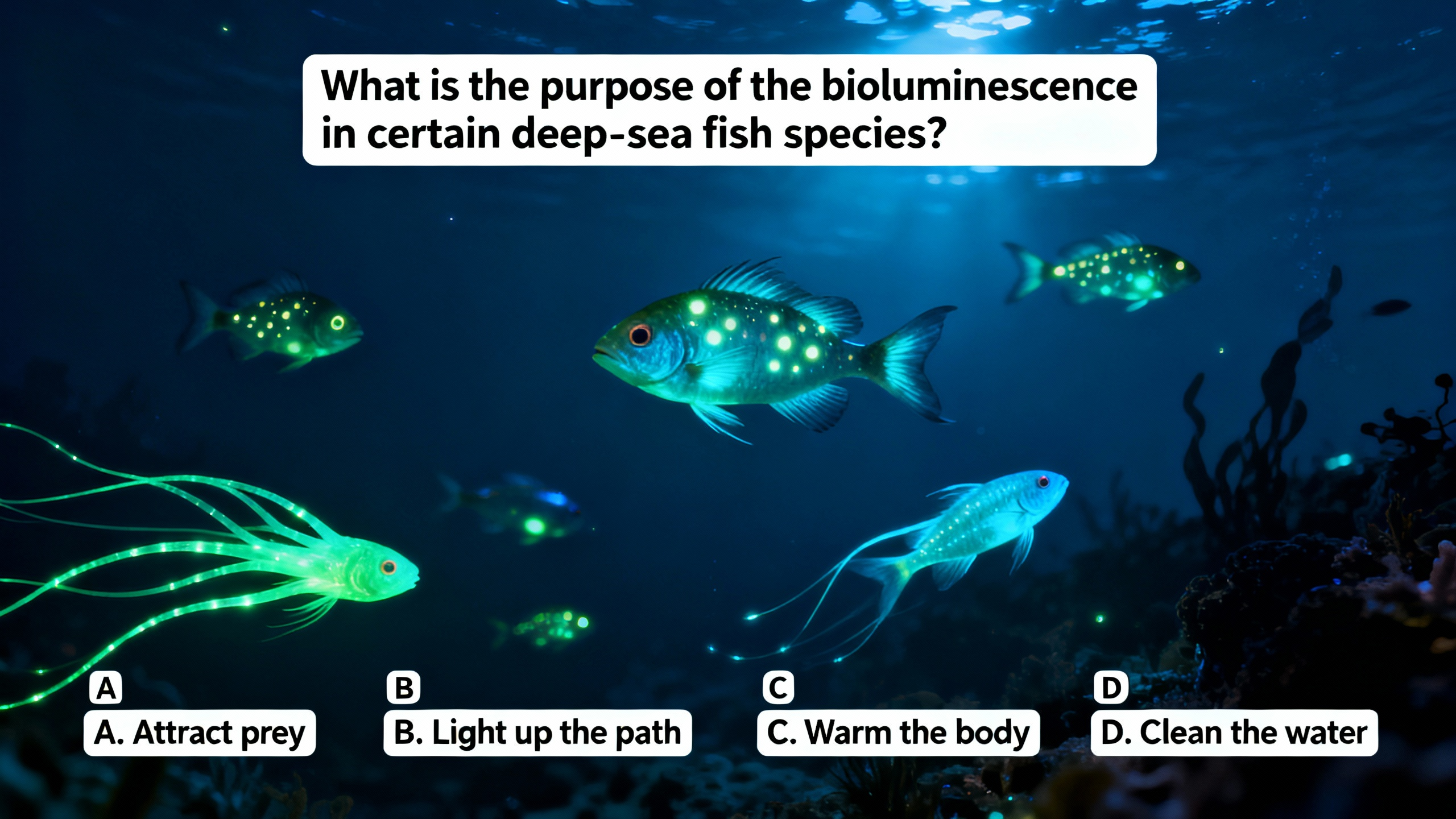
Bioluminescence in certain deep - sea fish species serves multiple crucial purposes, primarily related to survival and reproduction in the extreme environment of the deep sea. The deep sea is a realm of mystery, with crushing pressures, frigid temperatures, and complete darkness. In such a harsh environment, these fish have evolved the remarkable ability to produce their own light, which has become a key factor in their survival. 
One of the main functions of bioluminescence is predation. In the pitch - black depths of the ocean, where visibility is almost zero, many deep - sea fish use bioluminescence as a form of luring prey. For example, the anglerfish has a specialized bioluminescent appendage on its head. The light emitted by this appendage acts like a fishing lure, attracting smaller fish and invertebrates. These unsuspecting creatures are drawn towards the light, thinking it might be a potential food source or a safe area. Once they get close enough, the anglerfish can quickly snap them up. This method of hunting gives these fish a significant advantage in an environment where food is scarce and difficult to find.
To understand the effectiveness of this predatory strategy, we need to look at the behavior of the prey species. In the deep sea, many organisms are attracted to light because it can indicate the presence of food or a safe haven. Some small fish and invertebrates follow bioluminescent plankton, which are a common food source. When they see the light from the anglerfish's appendage, they mistake it for the light of the plankton. The anglerfish has evolved to mimic the natural light patterns of these plankton, making its lure even more enticing.
Another interesting aspect is the control that the anglerfish has over its bioluminescent lure. It can adjust the intensity and frequency of the light to make it more appealing. For instance, it might create a pulsating light that mimics the movement of a small, struggling organism, which is more likely to attract the attention of potential prey. This level of control shows the high degree of adaptation that has occurred in these fish over time. 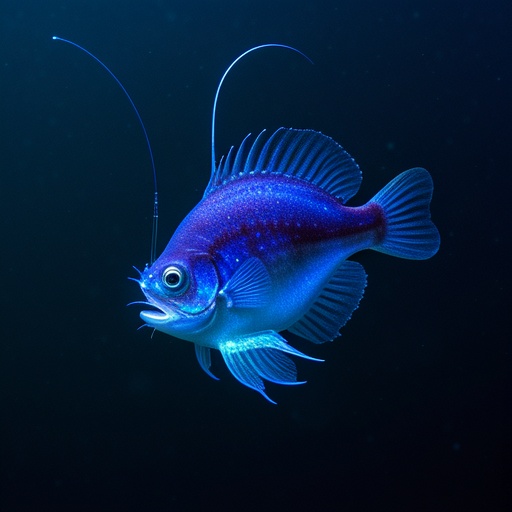
Another important purpose is communication and mating. Bioluminescence can be used as a form of visual communication among members of the same species. Different patterns and intensities of light can convey various messages. For instance, during the mating season, male fish may use specific bioluminescent displays to attract females. These displays can signal the male's health, genetic quality, and readiness to mate. Females can then choose a suitable partner based on these visual cues. Additionally, some species use bioluminescence to recognize members of their own species in the vast expanse of the deep sea, which is essential for social interactions and group behavior.
Let's take a closer look at the mating displays. In some species, the male fish will perform elaborate light shows. They might create complex patterns of light on their bodies, such as stripes or dots that flash in a specific sequence. These patterns are unique to each species and can be used to identify potential mates. For example, a male fish with a strong and consistent bioluminescent display may indicate good health and genetic fitness. Females are more likely to be attracted to these males because they want to pass on the best genes to their offspring.
Communication within a species is not limited to mating. Some deep - sea fish use bioluminescence to signal danger or to coordinate group movements. For example, a school of fish might use synchronized bioluminescent flashes to stay together and avoid predators. This form of communication is crucial in an environment where sound travels differently and visual cues are often the only reliable way to interact with other members of the species. 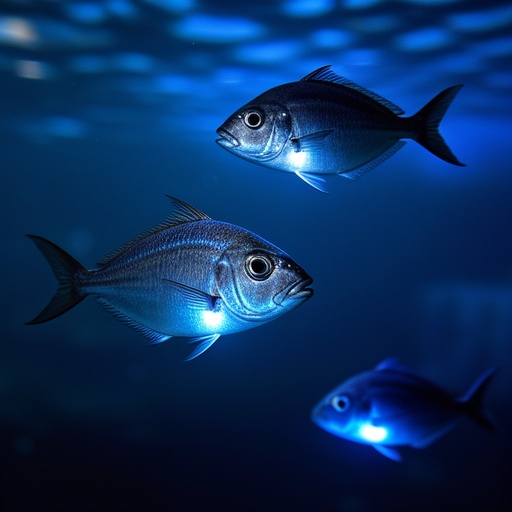
Bioluminescence also plays a role in defense. Some deep - sea fish can produce a sudden, bright flash of light when threatened by a predator. This flash can startle the predator, giving the fish a chance to escape. In some cases, fish can release bioluminescent particles into the water, creating a cloud of light that confuses the predator and makes it difficult for them to track the fish. This form of defense is particularly effective in the dark environment, where the sudden appearance of light can be disorienting for the attacker.
Imagine a predator approaching a small deep - sea fish. As the predator gets close, the fish suddenly emits a blinding flash of light. This flash can temporarily blind the predator or at least make it lose its focus. The fish can then use this moment of confusion to swim away quickly. The release of bioluminescent particles is another clever strategy. When the predator tries to follow the fish, it is faced with a cloud of light that makes it difficult to distinguish the fish from the surrounding water. This gives the fish more time to escape and find a safe hiding place.
Some fish have even evolved different types of bioluminescent defenses for different predators. For example, against a slow - moving predator, a fish might use a long - lasting, bright flash to scare it away. But against a fast - moving predator, it might release a large amount of bioluminescent particles to create a more extensive cloud of confusion. 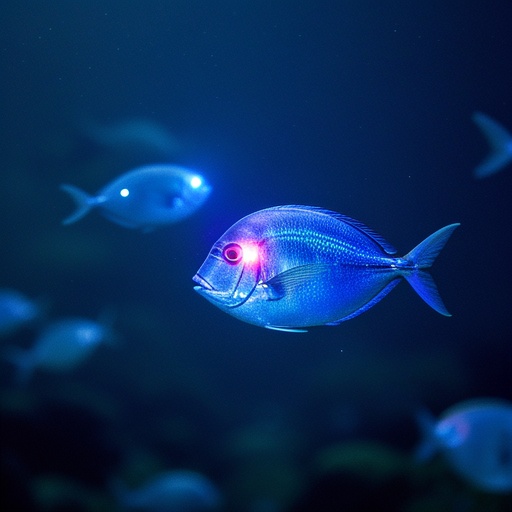
In conclusion, bioluminescence in deep - sea fish is a highly adaptive trait that has evolved to meet the unique challenges of the deep - sea environment. It is a multi - functional tool that aids in predation, communication, mating, and defense, allowing these fish to thrive in one of the most inhospitable places on Earth. The evolution of bioluminescence in these fish is a fascinating example of how organisms can adapt to extreme conditions. Scientists are still learning about the many ways in which these fish use bioluminescence, and there is much more to discover about this amazing phenomenon. As we continue to explore the deep sea, we are likely to uncover even more secrets about the role of bioluminescence in the lives of these remarkable fish.