Why Do Fireflies Synchronize Their Flashes?
Fireflies, those tiny creatures that illuminate the night with their soft, twinkling lights, have long captured the imagination of humans. Their enchanting light shows are a sight to behold, especially when large groups of them synchronize their flashes. This phenomenon is not only visually captivating but also a subject of great scientific interest. There are several theories to explain why some fireflies synchronize their flashes when they gather. Let's take a closer look at these theories and understand the possible reasons behind this amazing natural occurrence. 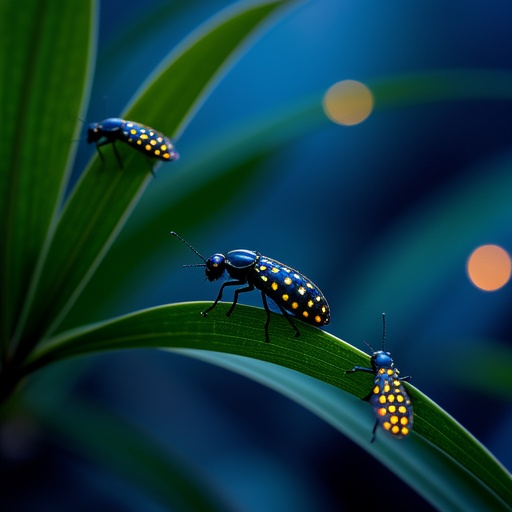
One of the most prominent theories regarding firefly synchronization is related to mating. Fireflies use their flashes as a sophisticated form of communication to find suitable mates. In the world of fireflies, each species has its own unique flashing pattern, which acts as a kind of biological Morse code. Males flash in a specific sequence, and females respond with their own characteristic flashes if they are interested. However, in a large gathering of fireflies, the situation can become quite chaotic. With numerous individual fireflies flashing randomly, it can be extremely difficult for potential mates to distinguish and respond to the signals. This is where synchronization comes into play. By synchronizing their flashes, the collective flash becomes a more prominent and attention - grabbing display.
Imagine a forest at night, filled with the random flashes of hundreds of fireflies. It would be like trying to pick out a specific radio signal from a sea of static. But when the fireflies synchronize, it's as if they turn up the volume on their signal. The unified flash stands out against the background, making it easier for female fireflies to notice the males and vice versa. For example, in some species, the females are more likely to respond to the synchronized flashes because they can more easily assess the quality and location of the males. A stronger, unified signal can cut through the background noise of the forest or marshland, enhancing the chances of successful mating. Scientists have conducted experiments where they observed that in areas with synchronized firefly displays, the mating success rate was significantly higher compared to areas where the fireflies flashed randomly.
Another possible reason for firefly synchronization is predator deterrence. A large group of fireflies flashing in unison creates an overwhelming visual display that can have a profound effect on potential predators. Predators, such as birds, frogs, and spiders, rely on their vision to hunt. When they encounter a sudden, coordinated burst of light from a group of fireflies, it can be very confusing or intimidating. The synchronized flashing gives the impression of a much larger and potentially more dangerous entity than a single firefly.
It's similar to the way some schools of fish or flocks of birds use coordinated movements to confuse predators. For instance, a school of fish might swim in a tight formation and change direction suddenly, making it difficult for a predator to single out an individual fish. In the case of fireflies, the synchronized flashing can startle predators, making them less likely to attack. Some predators may associate the bright, flashing lights with a toxic or unpalatable prey. After all, in nature, bright colors and sudden displays are often warning signs. So, by synchronizing their flashes, fireflies are using a form of collective defense mechanism to protect themselves from being eaten. Scientists have observed that predators are more hesitant to approach areas where fireflies are flashing synchronously compared to areas with random flashing.
In addition to mating and predator deterrence, the synchronization might also be a result of the fireflies' internal biological clocks and the way they interact with each other. Fireflies have an innate rhythm that governs their flashing behavior. This internal clock, known as a circadian rhythm, is influenced by factors such as the time of day, temperature, and light levels. When fireflies are in close proximity, they can sense the flashes of their neighbors. Through a process of mutual entrainment, they adjust their internal clocks to match the flashing pattern of the group.
To understand this better, think of a group of musicians tuning their instruments to each other. Each firefly is like a musician with its own rhythm, but when they are together, they start to play in harmony. The process of mutual entrainment is a complex one that involves a combination of visual and chemical signals. Fireflies can detect the light intensity and timing of their neighbors' flashes, and based on this information, they adjust their own flashing. This interaction and adjustment lead to the synchronization of their flashes, creating a beautiful and coordinated light show in nature. Scientists have used advanced imaging techniques to study the neural mechanisms behind this synchronization. They have found that certain neurons in the fireflies' brains are responsible for detecting and responding to the flashes of other fireflies, which ultimately leads to the adjustment of their internal clocks.
There are also some environmental factors that may contribute to firefly synchronization. For example, the availability of food and the quality of the habitat can influence the behavior of fireflies. In areas with abundant food sources and suitable living conditions, fireflies are more likely to gather in large numbers. This increased density of fireflies provides more opportunities for interaction and synchronization. Additionally, the time of year and the phase of the moon can also play a role. Some species of fireflies are more likely to synchronize their flashes during specific times of the year, which may be related to their breeding cycles.
Furthermore, the type of vegetation in the area can affect the visibility of the fireflies' flashes. In areas with dense vegetation, the synchronized flashes may be more effective in cutting through the foliage and reaching potential mates or deterring predators. On the other hand, in open areas, the random flashing may be more spread out and less effective. Scientists are still studying these environmental factors to fully understand how they interact with the biological and behavioral aspects of firefly synchronization.
The study of firefly synchronization has important implications for both biology and technology. In biology, it helps us understand the complex ways in which organisms communicate and interact with each other. It also provides insights into the evolution of behavior and the role of collective behavior in survival and reproduction. In technology, the concept of synchronization has been applied in areas such as wireless sensor networks. Just like fireflies synchronize their flashes to communicate effectively, sensor nodes in a network can synchronize their operations to improve data transmission and energy efficiency.
However, firefly populations around the world are facing numerous threats. Habitat loss, light pollution, and the use of pesticides are all taking a toll on these beautiful creatures. As their habitats are destroyed and they are exposed to artificial light at night, the natural synchronization patterns of fireflies may be disrupted. This can have a negative impact on their mating success and overall survival. Conservation efforts are needed to protect firefly habitats and reduce the impact of human activities on these amazing insects. By preserving their natural environments, we can ensure that future generations will still be able to witness the magical sight of synchronized firefly displays.
In conclusion, the synchronization of firefly flashes is a fascinating phenomenon that can be explained by multiple factors. Whether it's for mating, predator deterrence, or as a result of their internal biological clocks and environmental interactions, fireflies have evolved this unique behavior over millions of years. As we continue to study these creatures, we not only gain a better understanding of the natural world but also find inspiration for technological advancements. It is our responsibility to protect these delicate ecosystems and ensure that the enchanting light shows of fireflies continue to light up our nights for years to come.