Meteor Showers: A Cosmic Phenomenon
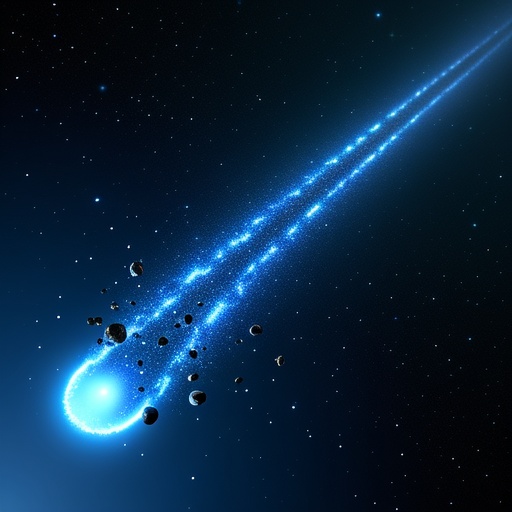 Meteor showers are truly one of the most captivating cosmic phenomena that grace our night skies. These celestial displays are created by cosmic debris, specifically the dust and small particles left behind by comets. Comets, often referred to as dirty snowballs, are fascinating celestial objects. They are composed of a unique mixture of ice, dust, and rocky material. This combination gives them their distinct characteristics and makes them the source of these spectacular meteor showers.
As a comet orbits the Sun, it undergoes a remarkable transformation. The intense heat from the Sun causes the ice within the comet to vaporize. This process is similar to how ice melts on a hot summer day, but on a much grander and more cosmic scale. As the ice turns into gas, it releases the dust and small fragments that were trapped within it into space. These particles then continue to follow the comet's orbit, forming a long trail of debris that stretches across the vast expanse of the solar system. This debris trail can be incredibly long, sometimes spanning millions of kilometers.
 When the Earth passes through this debris trail, a magical event occurs. The particles from the comet's debris enter the Earth's atmosphere at incredibly high speeds. To put this into perspective, these particles can be traveling at speeds of up to 72 kilometers per second! As they enter the atmosphere, they encounter a significant amount of air resistance. This friction with the atmosphere causes the particles to heat up to extremely high temperatures. In fact, the heat can be so intense that it causes the particles to glow and eventually vaporize. This process creates the streaks of light that we see as meteors. It's like watching a cosmic fireworks display right above our heads.
Imagine standing under a clear night sky during a meteor shower. You can see these bright streaks of light shooting across the sky, seemingly out of nowhere. Each meteor is a tiny piece of cosmic debris that has traveled through space for a long time before finally making its way into our atmosphere. Some meteors are so bright that they can even be seen during the early evening or just before dawn. These are often called fireballs, and they can be a truly awe-inspiring sight.
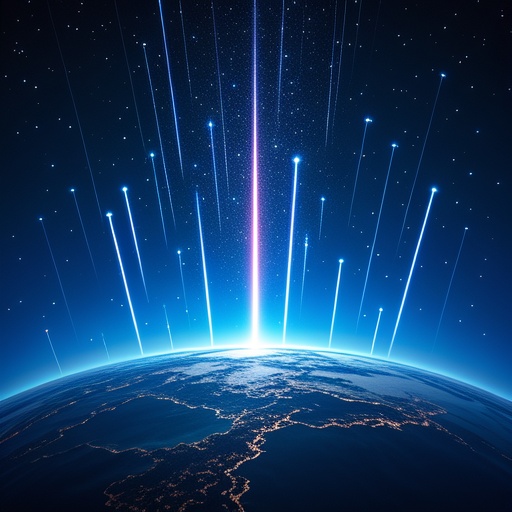
The reason meteor showers always seem to come from a particular point in the sky, known as the radiant, is due to perspective. The debris particles in the comet's trail are all moving in parallel paths through space. This is similar to how cars on a highway all move in the same general direction. As these particles enter the Earth's atmosphere, they appear to radiate from a single point in the sky. This is an optical illusion, much like the parallel lines of a railroad track seem to converge at a point on the horizon. When you look at a railroad track stretching into the distance, the two parallel lines seem to meet at a single point far away. The same principle applies to meteor showers.
This radiant point is named after the constellation in which it appears. For example, the Perseid meteor shower appears to come from the constellation Perseus. This naming convention helps astronomers and stargazers easily identify and talk about different meteor showers. The Perseid meteor shower is one of the most well - known and popular meteor showers. It occurs every year around mid - August and is known for its high number of bright meteors. During the peak of the Perseid meteor shower, you can sometimes see up to 60 or more meteors per hour.
Another famous meteor shower is the Leonid meteor shower. The radiant of the Leonid meteor shower is located in the constellation Leo. The Leonids are known for their occasional meteor storms, where the number of meteors can reach thousands per hour. These storms are relatively rare, occurring only every 33 years or so. The last major Leonid meteor storm was in 2001, and it was a truly unforgettable event for those who were lucky enough to witness it. During the storm, the sky was filled with so many meteors that it looked like it was raining stars.
To observe a meteor shower, you don't need any special equipment. All you need is a clear night sky, away from the light pollution of cities. Find a comfortable spot, lie back, and let your eyes adjust to the darkness. It usually takes about 20 - 30 minutes for your eyes to fully adapt, and then you'll start to see the meteors more clearly. You can also bring a blanket or a lawn chair to make your viewing experience more comfortable.
It's important to note that the best time to observe a meteor shower is usually after midnight. This is because the side of the Earth that is facing forward in its orbit around the Sun (the leading side) is more likely to encounter the debris particles. As the Earth moves through space, it plows into the debris trail, and the particles are more likely to enter the atmosphere on the leading side. So, if you're planning to watch a meteor shower, set your alarm for the early hours of the morning.
Meteor showers also have a rich cultural and historical significance. Throughout history, different cultures have had their own interpretations of these celestial events. In some cultures, meteor showers were seen as omens, either of good or bad fortune. For example, the ancient Chinese believed that meteor showers were a sign of the gods' anger or approval. In other cultures, they were seen as a time of celebration and a connection to the cosmos. Native American tribes often had stories and legends associated with meteor showers, which were passed down from generation to generation.
From a scientific perspective, meteor showers provide valuable information about the composition of comets and the early solar system. By studying the meteors that reach the Earth's surface (meteorites), scientists can analyze their chemical composition. These meteorites can contain elements and compounds that are billions of years old, giving us a glimpse into the conditions that existed when the solar system was first formed. For example, some meteorites have been found to contain organic molecules, which are the building blocks of life. This has led scientists to speculate about the possibility of life existing elsewhere in the universe.
In summary, meteor showers are caused by the dust and small particles left behind by comets. When the Earth passes through a comet's debris trail, these particles enter the atmosphere and create meteors. The radiant point from which the meteors seem to originate is an effect of perspective, as the parallel paths of the debris particles appear to converge in the sky. These celestial displays are not only a beautiful sight to behold but also a window into the mysteries of the universe. Whether you're a seasoned astronomer or just someone who loves to look up at the night sky, a meteor shower is an event that should not be missed.