To understand the transformative potential of 6G—beyond 5G’s speed and connectivity—it helps to frame it not as a “faster network” but as a foundation for redefining human-technology interaction. Where 5G enabled “always-on” access to data, 6G will merge digital and physical realities, enable real-time sensory exchange, and create systems that perceive, react, and collaborate at a planetary scale. Below are four (plus one) mind-blowing application scenarios, grounded in authoritative research and 6G’s technical benchmarks (e.g., sub-1ms latency, 100x higher data density than 5G, and integrated sensing/computing).
1. True Tactile Internet: Haptic Telepresence That Blurs Physical Distance
5G introduced basic haptic feedback—think vibration in a VR controller or a smartwatch alert—but 6G will deliver “tactile internet”: high-fidelity, real-time touch that replicates force, texture, and even temperature across continents. The International Telecommunication Union (ITU)’s IMT-2030 framework (the global standard for 6G) mandates end-to-end latency <1ms for tactile applications—critical for experiences where even a 10ms delay breaks immersion. Dr. Mischa Dohler, a leading 6G researcher at King’s College London and co-author of Tactile Internet: The Next Evolution of Connectivity, explains: “6G haptics aren’t just about ‘feeling’—they’re about action. A surgeon in London could operate on a patient in Nairobi and ‘feel’ the resistance of the tissue, the tension of a suture, as if their hands were in the same room.”

The implications are revolutionary. In telemedicine, a rural patient could receive a biopsy from a specialist in a major city, with the doctor “feeling” the lump’s hardness via a haptic robot. In manufacturing, an engineer in Berlin could remotely assemble a microchip in Seoul, using a robotic arm that transmits the exact pressure needed to solder a component. Even education would transform: a piano student in Rio de Janeiro could learn from a teacher in Vienna by “feeling” the teacher’s finger placement on a haptic keyboard—no more guessing at technique through a video call. This isn’t just “remote work”; it’s remote presence—where distance becomes irrelevant for tasks requiring touch.
2. Omniscient Environmental Sensing: A Network That “Sees” and “Smells” the World
5G connected billions of IoT devices (thermostats, wearables, industrial sensors), but 6G will turn the network itself into a sensor. Using radio frequency (RF) sensing—where 6G’s high-bandwidth signals bounce off objects and analyze reflections—networks will “see” through walls, detect gas leaks, monitor crop health, and track vital signs without cameras or wearables. The EU’s €1 billion 6G Flagship project calls this “sensing as a service”: a shared infrastructure where cities, farms, and hospitals tap into 6G’s “digital eyes and ears” instead of deploying standalone sensors.

Consider disaster response: 6G networks could detect a forest fire before smoke is visible by analyzing changes in RF signal reflection from dry vegetation. In smart agriculture, 6G could monitor soil moisture at the level of individual plant roots or detect pest infestations by “listening” to insect movement via RF vibrations—all without invading farmland with thousands of sensors. Even healthcare would benefit: researchers at MIT’s Media Lab have already demonstrated that 6G-like RF signals can track vital signs (heart rate, respiration) through walls with 99% accuracy—meaning a 6G network could alert emergency services to a heart attack in a home before the patient calls 911. This isn’t just “smart cities”; it’s a planet-scale nervous system that anticipates problems and reacts in real time.
3. Neural Interface Symbiosis: Brain-Computer Communication at 100+ Mbps
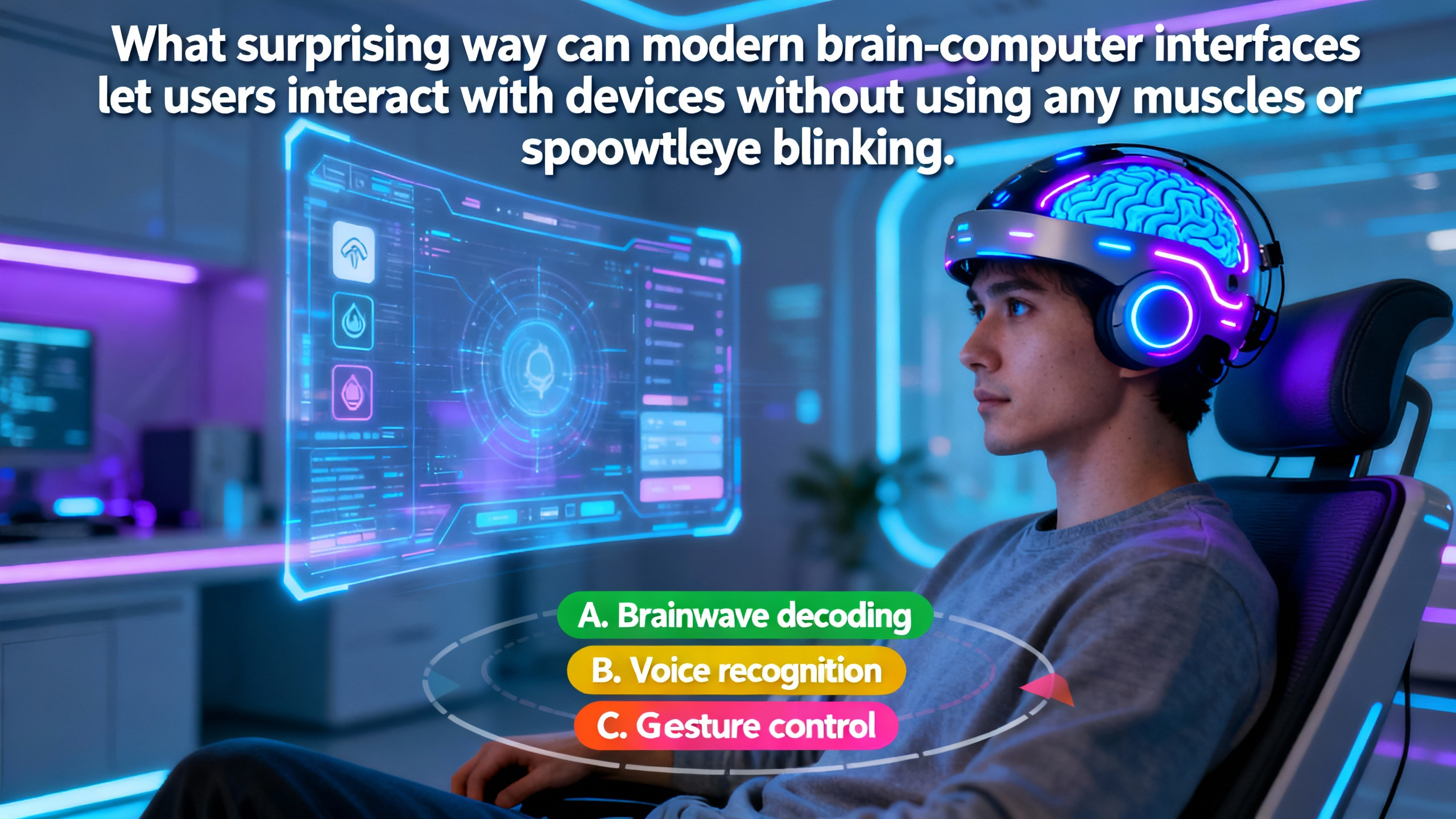
5G enabled basic brain-computer interfaces (BCIs)—like controlling a mouse with your mind—but 6G will unlock “brain-device symbiosis”: high-bandwidth, low-latency connections that let brains and machines exchange data seamlessly. The IEEE’s 2021 paper 6G for Brain-Computer Interfaces notes that 6G could support 100+ Mbps data rates for BCIs—enough to transmit the equivalent of 10,000 text messages per second from brain to device. Dr. Theodore Berger, a neuroscientist at the University of Southern California (USC) who developed the first wireless neural prosthetic, predicts: “6G will turn BCIs from ‘assistive technology’ to ‘augmentative technology.’ A writer could think a sentence, and it would appear on a screen instantly—no keyboard, no voice-to-text.”

The use cases are transformative. For paraplegics, 6G-connected exoskeletons could translate neural signals into movement with zero delay—enabling walking that feels “natural” rather than robotic. For astronauts, 6G BCIs could let crews collaborate by sharing abstract thoughts (e.g., a scientist on Mars “sending” a visual of a rock sample to a geologist on Earth, along with their intuition about its composition). Even education could evolve: students learning a new language could “download” vocabulary via neural interfaces, or musicians could share muscle memory to master an instrument faster. This isn’t just “controlling devices with your mind”; it’s merging human cognition with digital systems to expand what we can perceive and create.
4. Multi-Sensory Extended Reality (XR): Immersion That Engages All Senses
5G made VR/AR mainstream—think Meta Quest 3 or Google Glass—but 6G will deliver “sensory XR”: experiences that combine visual, audio, touch, smell, and taste into a single, seamless immersion. Samsung’s Advanced Institute of Technology (SAIT) detailed this in its 2022 white paper 6G: The Foundation for Immersive Experiences, which calls for 6G to support “100% sensory coverage” via integrated haptic suits, olfactory interfaces, and taste simulators. The University of Southern California’s Institute for Creative Technologies (ICT)—which designs VR for military training and medical therapy—has already prototyped a “multi-sensory pod” where users can “smell” a forest fire (pine smoke, charred wood) or “taste” a lemon (via electrical stimulation of the tongue) while watching a VR video.
Imagine attending a concert in Tokyo from your living room: you feel the bass thrum in your chest (haptic vest), smell the sweat and popcorn (olfactory diffuser), and taste the beer from the venue’s bar (tongue stimulator)—all synchronized with 8K 360° video. For tourism, you could “visit” the Great Wall of China and feel the wind on your face, smell the dust of the ancient stones, and taste jianbing (a Chinese street food) from a nearby vendor—no plane ticket required. Even therapy would change: a person with PTSD could revisit a traumatic memory in VR, but with calming smells (lavender) and soft textures (a weighted blanket) delivered via 6G to help them process the experience safely. This isn’t just “virtual reality”; it’s “digital reality”—where the line between “real” and “simulated” disappears.
5. Decentralized Autonomous Systems: Swarms That Think as One
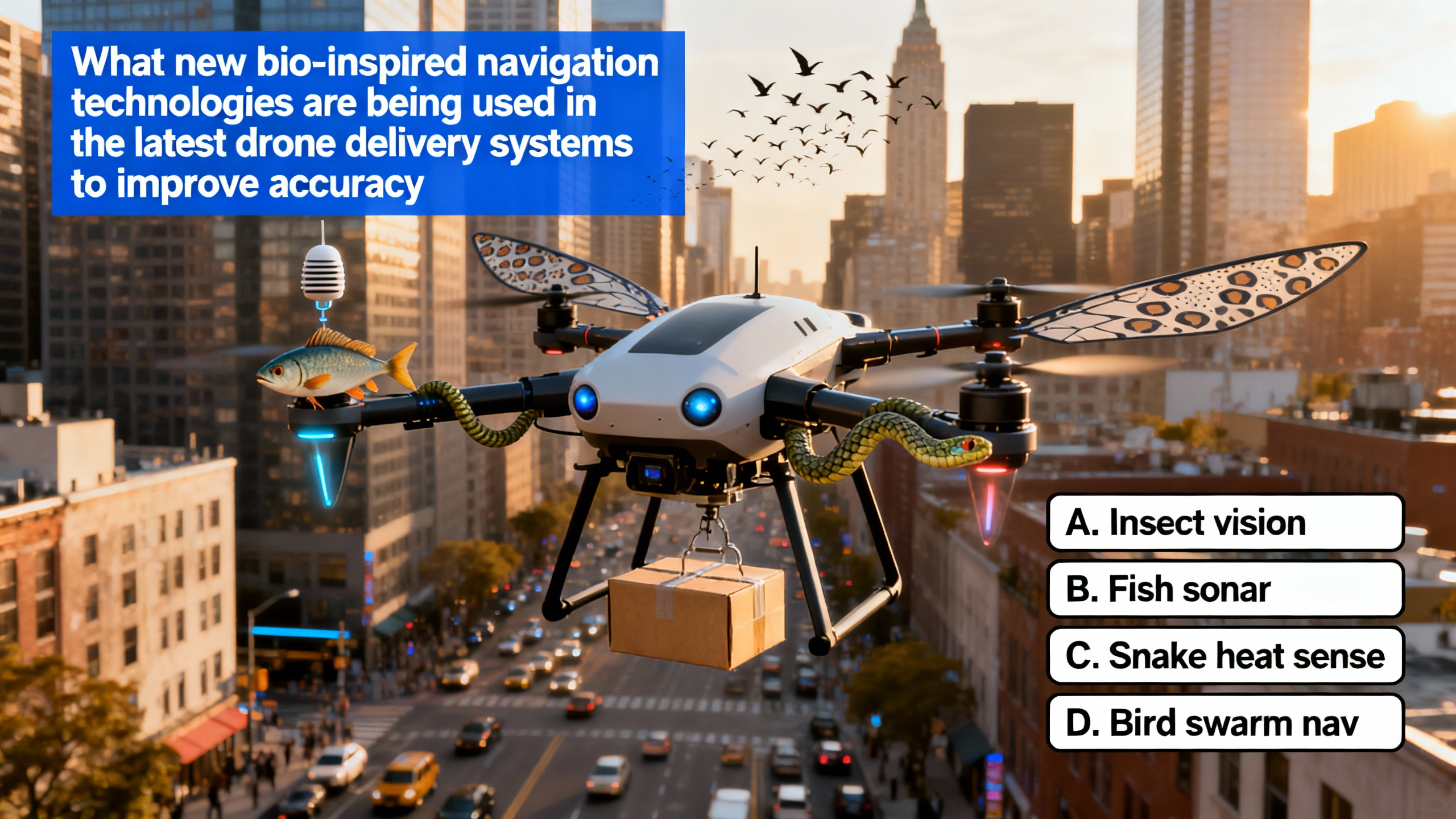
Where 5G enabled single autonomous devices (self-driving cars, delivery drones), 6G will power massively coordinated systems—swarms of thousands of robots, drones, or vehicles that communicate, learn, and adapt in real time. The National Institute of Standards and Technology (NIST)’s 6G working group emphasizes that 6G must support “collective intelligence”: systems where each node (drone, car, sensor) shares data with the swarm, enabling decisions that are smarter than any individual device. Researchers at Stanford University’s Autonomous Systems Lab have simulated 6G-powered drone swarms that can extinguish wildfires 10x faster than human crews by dividing the fire into zones, sharing real-time temperature data, and adjusting their water drops collectively.
For cities, this means traffic systems where every car, traffic light, and pedestrian’s phone communicates via 6G to optimize routes—cutting commute times by 80% and emissions by 50%. For logistics, Amazon could use 6G drone swarms to deliver packages in 15 minutes—even in rain or snow—by having drones share wind data and adjust their flight paths together. For disaster response, 6G-powered robot swarms could search for survivors in a collapsed building, with each robot transmitting video, temperature, and gas readings to the swarm—enabling the group to “see” through rubble and find people faster than human rescuers. This isn’t just “autonomous devices”; it’s a planet-scale “hive mind” that solves problems no single machine (or human) could handle alone.
Why This Matters: 6G Isn’t Just Faster—It’s a New Era of “Presence”
All these scenarios share a common thread: 6G will make technology “disappear”. Where 5G required you to look at a screen to access data, 6G will integrate data into your senses (touch, smell), your environment (sensing walls, crops), and your cognition (brain interfaces). The ITU sums this up in IMT-2030: 6G’s goal is to enable “hyper-connectivity with hyper-presence”—experiences where you aren’t just “using” technology, but living with it.
Of course, these scenarios raise ethical questions (privacy with neural interfaces, control over swarm systems, digital divide risks). But the technical feasibility is there: 6G’s benchmarks (sub-1ms latency, 1 Tbps data rates, integrated sensing) are already being tested in labs around the world. By 2030—when 6G is expected to launch commercially—these “mind-blowing” scenarios won’t be science fiction. They’ll be how we work, learn, heal, and explore.
In short: 5G connected us to data. 6G will connect us to each other—and to the world—like never before.