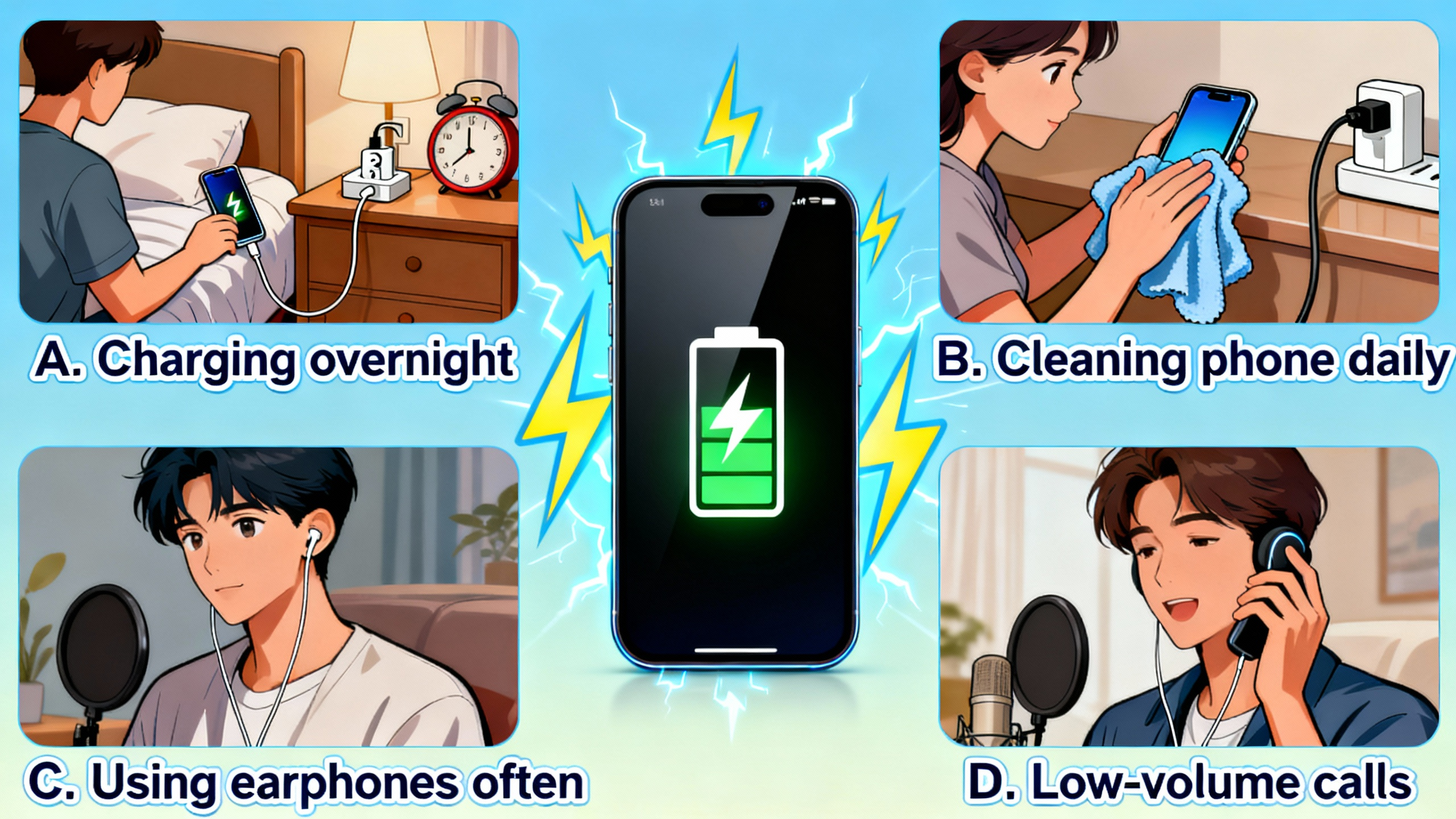
Daily Habits That Accelerate Smartphone Battery Degradation
 In today's digital age, smartphones have become an indispensable part of our lives. From staying connected with friends and family to managing work and entertainment, we rely on these devices throughout the day. However, several seemingly harmless daily habits can actually speed up the degradation of a smartphone's battery. One of the most common is overcharging. Many people have the habit of leaving their phones plugged in overnight or for extended periods, under the assumption that the device will stop charging once it reaches 100%. This is a widespread misconception. Modern lithium - ion batteries, which are used in most smartphones, can still experience a small amount of charging cycles even when the battery is full. When a battery is fully charged, the charger continues to supply a small amount of current, known as a trickle charge. This continuous trickle charge generates heat. High temperatures are known to be a major culprit in accelerating battery degradation. To understand this better, let's look at the internal workings of a lithium - ion battery. Inside the battery, there are chemical reactions that occur during the charging and discharging process. When the battery is exposed to high temperatures, these chemical reactions happen at a much faster rate. This increased reaction rate can cause the breakdown of the battery's components over time. For instance, the electrodes in the battery can start to degrade, and the electrolyte can lose its effectiveness. Over time, the impact of overcharging becomes evident. The battery's capacity, which refers to the amount of charge it can hold, starts to decrease significantly. You may notice that your phone doesn't last as long on a single charge as it used to. For example, if your phone once lasted a full day with normal usage, after a period of overcharging, it might only last a few hours. This reduction in capacity not only affects your daily usage but also shortens the overall lifespan of the battery. Eventually, you may find yourself having to replace the battery much sooner than expected.
 Another habit that can take a toll on your smartphone battery is using the phone while it's charging, especially for power - intensive tasks such as gaming or streaming high - definition videos. When you use the phone during charging, the battery is in a dual state. It is both being charged and supplying power to the device simultaneously. This dual operation causes the battery to heat up. The internal resistance of the battery increases with the additional load. To illustrate this, think of a water pipe. When you try to push a large amount of water through a narrow pipe, there is more resistance, and the pipe may heat up due to the increased pressure. Similarly, when the battery has to handle the charging process and powering the phone's functions at the same time, the internal resistance goes up, and heat is generated. Heat is the enemy of lithium - ion batteries. As mentioned earlier, it can cause the chemical reactions inside the battery to occur more rapidly. When these reactions happen too quickly, it can lead to the breakdown of the battery's components. For example, the lithium ions that move between the electrodes during charging and discharging can become unstable at high temperatures. This instability can cause the formation of unwanted deposits on the electrodes, which further reduces the battery's efficiency. Moreover, the combined stress of charging and heavy usage can put extra strain on the battery. The battery has to work harder to meet the demands of both charging and powering the device. This extra strain leads to faster wear and tear. You may start to notice that your phone gets very hot during such usage, and over time, the battery's performance deteriorates. The phone may start to shut down unexpectedly, or the charging time may increase significantly.
Exposing the phone to extreme temperatures, whether hot or cold, is yet another habit that can harm the battery. In hot environments, the chemical reactions inside the battery speed up. Just like overcharging, this increased reaction rate can cause the battery to degrade more quickly. For example, if you leave your phone in a hot car during summer, the temperature inside the car can reach extremely high levels. The battery is then exposed to these high temperatures, which can cause irreversible damage. On the other hand, in cold temperatures, the battery's ability to hold and deliver charge is reduced. When it's cold, the chemical reactions inside the battery slow down. This slowdown affects the movement of lithium ions between the electrodes. As a result, the battery may not be able to provide the same amount of power as it does at normal temperatures. You may notice that your phone's battery percentage drops rapidly in cold weather, even if you haven't been using it much. Let's take a real - life example. Suppose you're on a winter camping trip. You take your phone out to take a few pictures, and you notice that the battery level drops from 50% to 10% in a matter of minutes. This is because the cold temperature has reduced the battery's ability to deliver charge. Even short - term exposure to extreme temperatures can have a negative impact on the battery's long - term performance. The repeated exposure to hot and cold conditions can cause cumulative damage to the battery, leading to a gradual decline in its capacity and performance over time.
It's not just these three habits that can affect battery degradation. There are other factors as well. For instance, fast charging, while convenient, can also contribute to battery degradation. Fast charging pumps a large amount of current into the battery in a short period. This high - current flow generates heat, which, as we know, is harmful to the battery. Additionally, using uncertified chargers can also be a problem. These chargers may not provide the correct voltage and current, which can cause overcharging or overheating. To maintain the battery's health, it's advisable to avoid these habits as much as possible. Instead of overcharging, you can unplug your phone once it reaches 100% or use a charger with an automatic shut - off feature. When using your phone, try to avoid power - intensive tasks while it's charging. If you need to use your phone in extreme temperatures, try to keep it in a temperature - controlled environment as much as possible. For example, if it's hot outside, you can keep your phone in a shaded area or use a cooling case. In conclusion, overcharging, using the phone while charging for power - intensive tasks, and exposing the phone to extreme temperatures are seemingly harmless daily habits that can significantly speed up the degradation of a smartphone's battery. By being aware of these habits and taking steps to avoid them, you can extend the lifespan of your smartphone battery and ensure that your phone continues to serve you well for a long time.