Quantum Teleportation: A Reality in Subatomic World
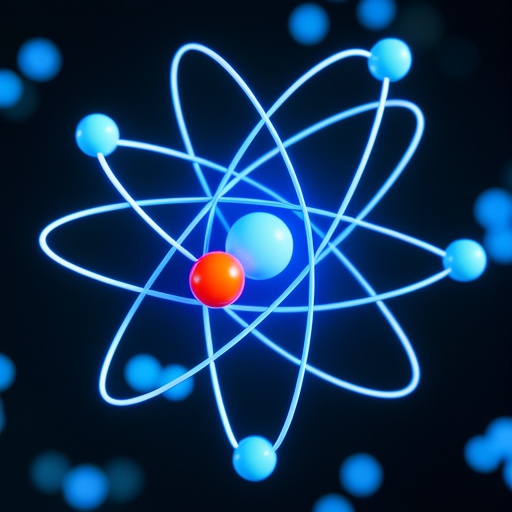 Yes, scientific experiments have successfully demonstrated a form of quantum "teleportation" with subatomic particles. Quantum teleportation is a fascinating and revolutionary process that transfers quantum states from one particle to another over a distance, without the physical movement of the original particle. To understand this better, let's first delve into the concept of a quantum state. A quantum state describes all the possible properties and behaviors of a subatomic particle at a given time. For example, an electron can have different quantum states related to its spin, energy level, and position within an atom. Quantum teleportation relies on the principles of quantum entanglement, a phenomenon that has puzzled and intrigued scientists for decades. Quantum entanglement is where two or more particles become linked in such a way that the state of one particle instantly influences the state of the other, regardless of the distance separating them. It's as if these particles share a mysterious connection that defies our classical understanding of space and time. Imagine two entangled photons, one on Earth and the other on the far side of the galaxy. If you measure the state of the photon on Earth, the state of the photon on the other side of the galaxy will instantaneously change to a corresponding state. This instantaneous influence, which seems to violate the speed - of - light limit, is what makes quantum entanglement so mind - boggling.
 The first successful demonstration of quantum teleportation occurred in 1997 by a team of scientists led by Anton Zeilinger at the University of Innsbruck, Austria. This was a groundbreaking moment in the history of quantum physics. They teleported the quantum state of a photon (a particle of light) onto another photon. The experiment was a complex and carefully orchestrated process. First, the scientists had to create an entangled pair of photons. This was achieved through a process called spontaneous parametric down - conversion, where a high - energy photon is passed through a special crystal. The crystal splits the high - energy photon into two lower - energy photons that are entangled. These entangled photons are like two sides of a coin, their states are intertwined. Then, they took a third photon whose state they wanted to teleport. They performed a joint measurement on one of the entangled photons and this third photon. This measurement is crucial as it collapses the quantum states of the two photons involved in the measurement. When the measurement is made, the information about the state of the third photon is transferred through the entangled connection. Through this strange quantum link, the state of the third photon was instantaneously transferred to the second entangled photon. It's important to note that the original photon whose state was being teleported doesn't physically move. Instead, its quantum state is transferred to another photon at a different location. This experiment was a major step forward in validating the theoretical predictions of quantum mechanics and opened the door for further research in the field of quantum teleportation.
 Since the 1997 experiment, numerous experiments have replicated and extended these results. Scientists have been able to teleport the quantum states of other subatomic particles, such as atoms and ions. For atoms, the process is even more challenging compared to photons because atoms are much more massive and interact more strongly with their environment. But through advanced cooling and trapping techniques, scientists have been able to isolate atoms and entangle them to perform teleportation experiments. These experiments not only confirm the strange predictions of quantum mechanics but also hold significant potential for future technologies. In the field of quantum computing, quantum teleportation is a key concept. Classical computers use bits, which can be either 0 or 1. Quantum computers, on the other hand, use qubits. Qubits can exist in a superposition of states, meaning they can be 0, 1, or a combination of both at the same time. Quantum teleportation can be used to transfer the quantum states of qubits between different parts of a quantum computer. This is essential for performing complex calculations more efficiently than classical computers. For example, in simulating quantum systems, quantum computers with the help of quantum teleportation can provide results much faster than their classical counterparts, which could have far - reaching implications in fields such as drug discovery and material science. In quantum communication, quantum teleportation offers a way to transmit information securely. The security of quantum communication is based on the principles of quantum mechanics. When information is teleported, any attempt to eavesdrop on the communication will disrupt the quantum states, making the eavesdropping detectable. This is in contrast to classical communication, where it can be difficult to detect if someone is intercepting the information. For instance, banks could use quantum communication with quantum teleportation to transfer sensitive financial data without the fear of it being intercepted and misused. Overall, these successful demonstrations of quantum teleportation represent a major milestone in the field of quantum physics. They have pushed the boundaries of our understanding of the subatomic world and have opened up a new era of technological possibilities. However, there are still many challenges ahead. One of the main challenges is scaling up the technology. Currently, quantum teleportation experiments are mostly done with a small number of particles in highly controlled laboratory environments. To make quantum teleportation a practical technology for everyday use, scientists need to find ways to perform these experiments with larger numbers of particles and in less controlled, real - world conditions. Another challenge is reducing the error rates in the teleportation process. Even small errors can lead to significant inaccuracies in the transferred quantum states, which can affect the performance of quantum computers and the security of quantum communication systems. Despite these challenges, the future of quantum teleportation looks promising. With continued research and technological advancements, we may one day see quantum teleportation being used in a wide range of applications, from secure global communication networks to powerful quantum computers that can solve problems we currently consider intractable.